
Logo CIMPA

France

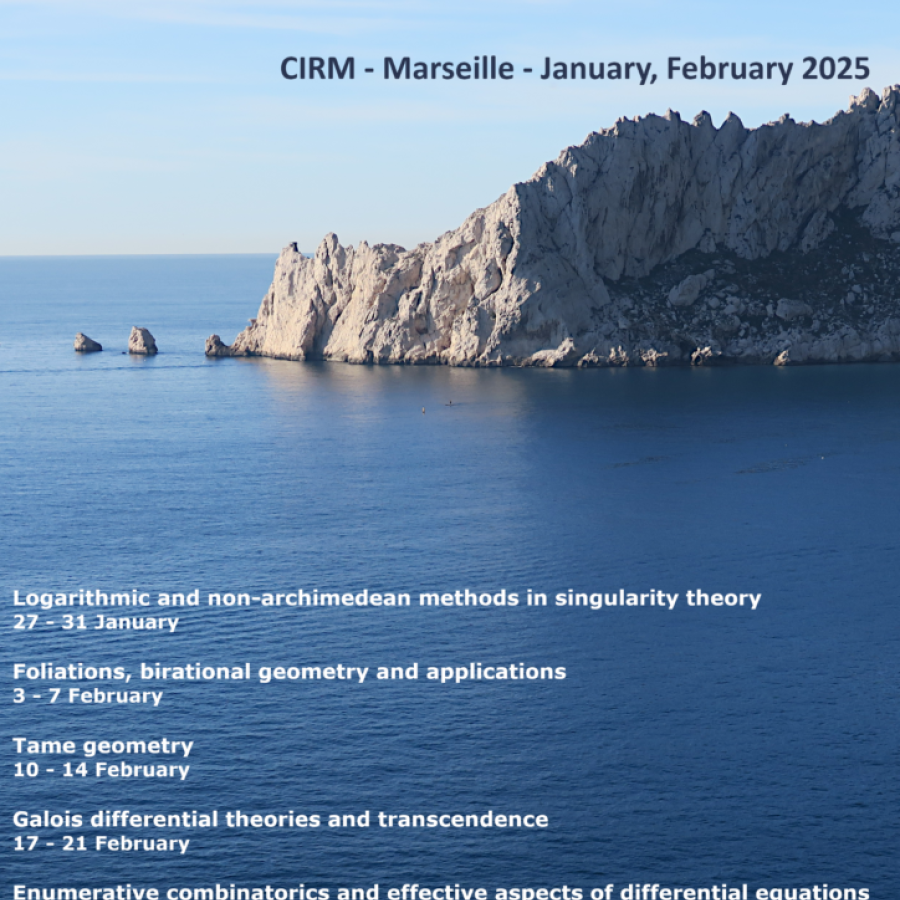
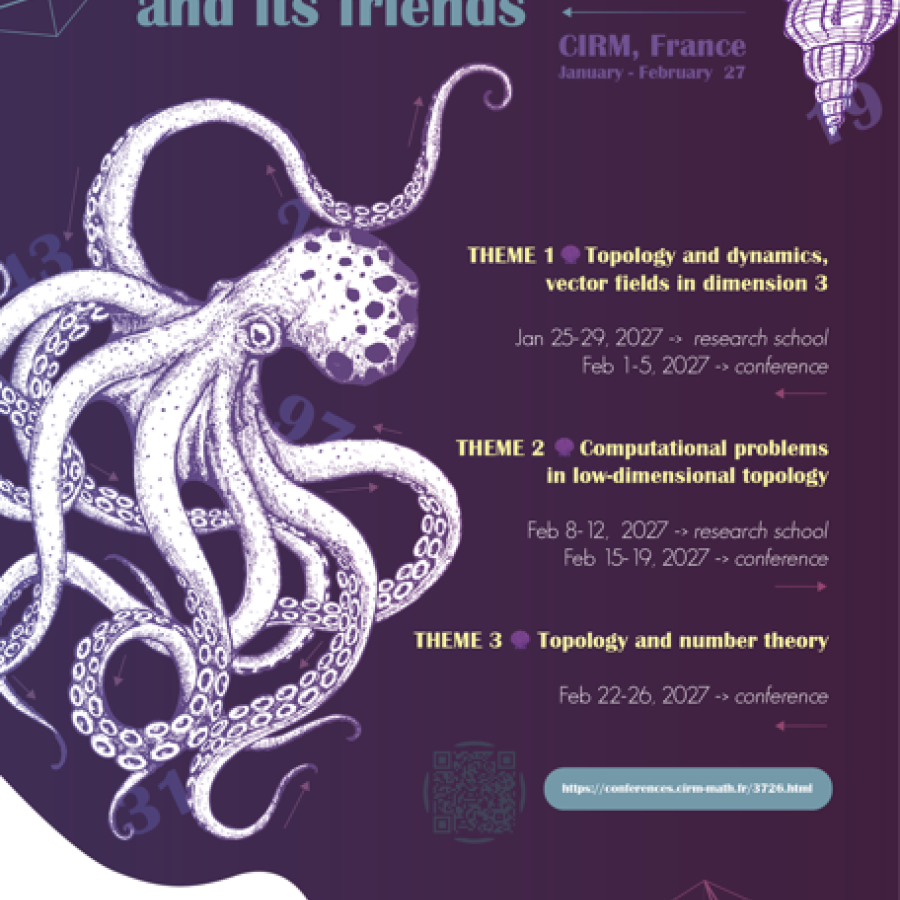
Geometric topology and its friends

While landmark achievements by Perelman, Agol, and others have recently resolved major questions in dimension 3, the field of low-dimensional topology remains vibrant. Significant challenges persist—such as the L-space conjectureand the smooth PoincarĂ© conjecture in dimension 4—alongside emerging questions at the intersection of various mathematical disciplines.
 

Mon. 25 Jan, 2027 → Fri. 26 Feb, 2027

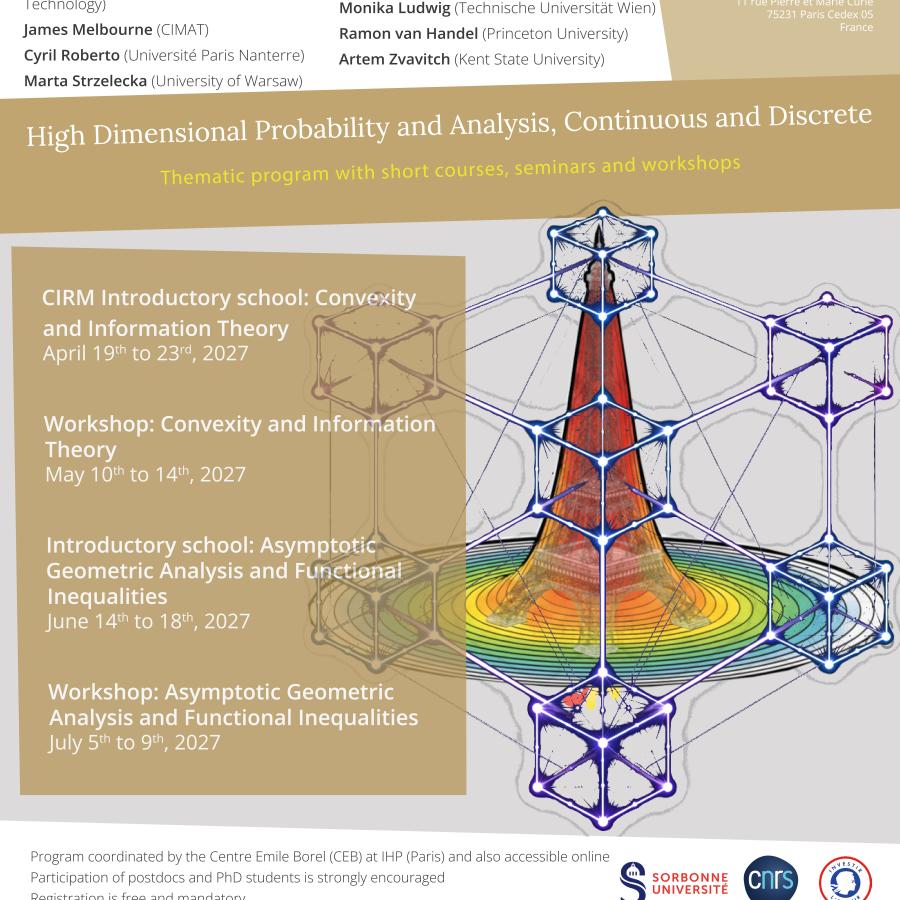
High Dimensional Probability and Analysis, Continuous and Discrete

Recent trends at the interface between information theory, probability, statistics and high-dimensional geometry raise new questions on the role and importance of entropy in the understanding of both asymptotic and finite range phenomena, in particular towards discrete structures and applications to areas such as quantum information, percolation and random matrices. Recent fruitful developments warrant imminent blossom of new ideas and results in this area in the near future.

Mon. 19 Apr, 2027 → Fri. 09 Jul, 2027

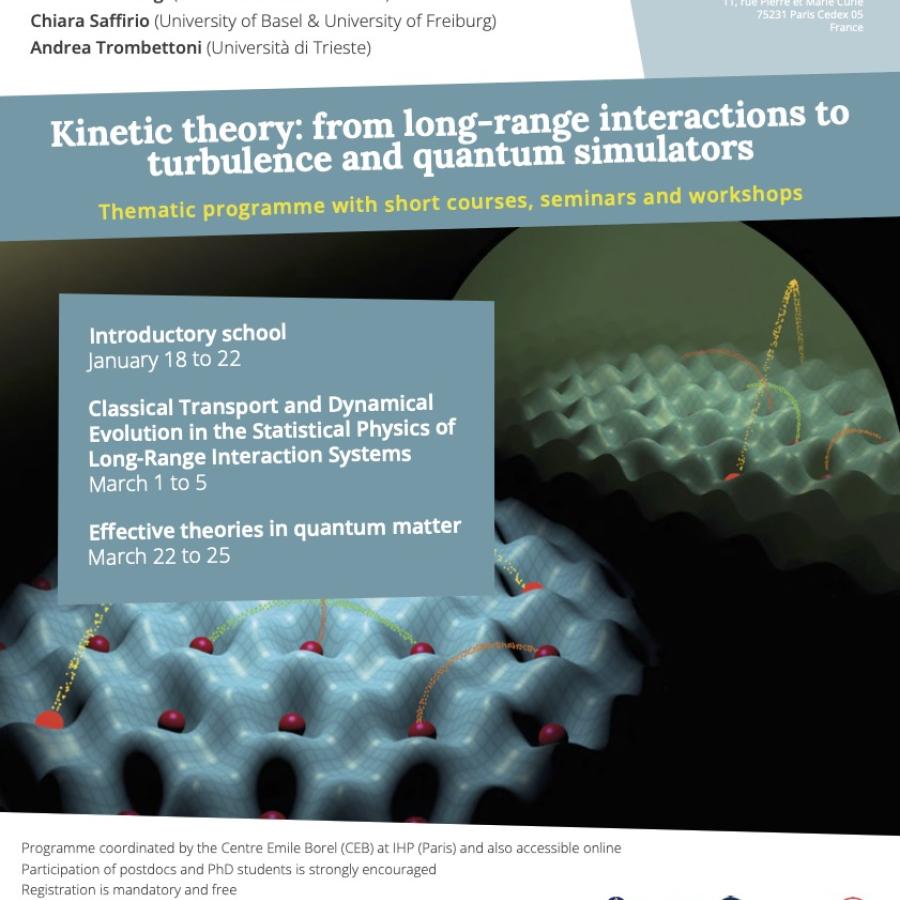
Kinetic theory

The program centers on the development of a unified understanding of kinetic theory in systems with long‑range interactions, with a particular emphasis on the quantum regime. Long‑range interacting quantum systems—realized experimentally in cold atoms, trapped ions, and polar molecules—exhibit rich dynamical behavior such as metastability, collisionless dynamics, anomalous transport, critical scaling, and turbulence‑like phenomena.

Mon. 18 Jan, 2027 → Fri. 09 Apr, 2027

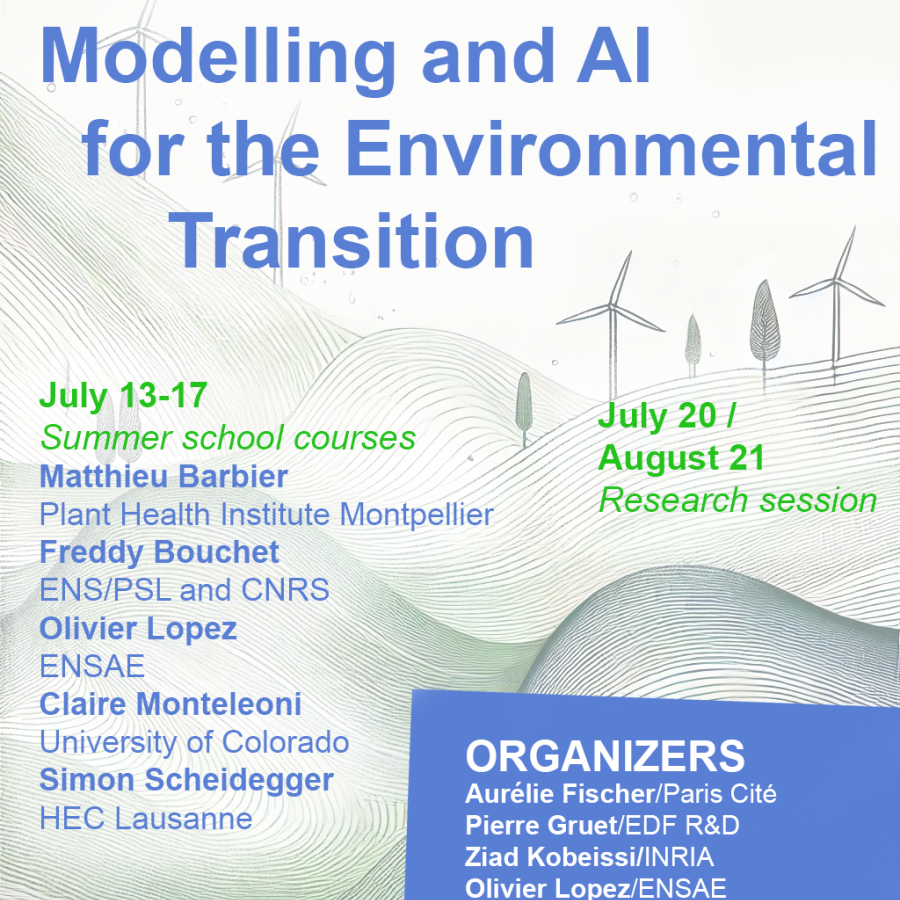
CEMRACS 26

Modelling and AI for the Environmental Transition

Program

Mon. 13 Jul, 2026 → Fri. 21 Aug, 2026

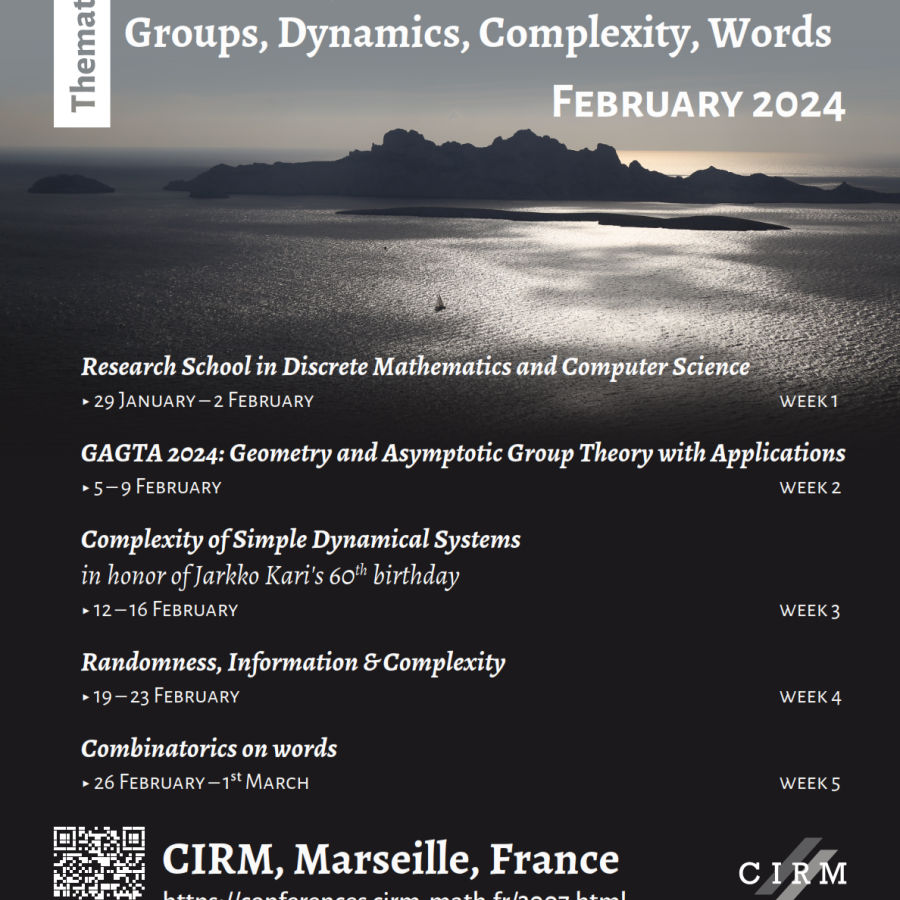
Discrete Mathematics & Computer Science: Groups, Dynamics, Complexity, Words

The interface of mathematics with computer science form a large, diverse and rich landscape. Of course, many classical mathematical tools and concepts turn out to be very useful to answer questions arising from computer science. Besides, the core objects of computer science (typically discrete) that were once considered non-classical in mathematics have now a well-established and growing theory. In addition, the main ideas of computer science (the very notions of computation and algorithmic complexity) yield new points of views and new questions on many mathematical objects.

Mon. 29 Jan, 2024 → Fri. 01 Mar, 2024

Scientific Machine Learning

Scientific Machine Learning (SciML) is a relatively new research field based on both machine learning (ML) and scientific computing tools. Its aim is the development of new methods to solve several kinds of problems, which can be forward multidimensional partial differential equations, identification of parameters, or inverse problems. The methods we seek must be robust, reliable and interpretable. The new SciML tools allow the natural inclusion of data in the numerical simulation in order to generate new results.

Mon. 17 Jul, 2023 → Fri. 25 Aug, 2023

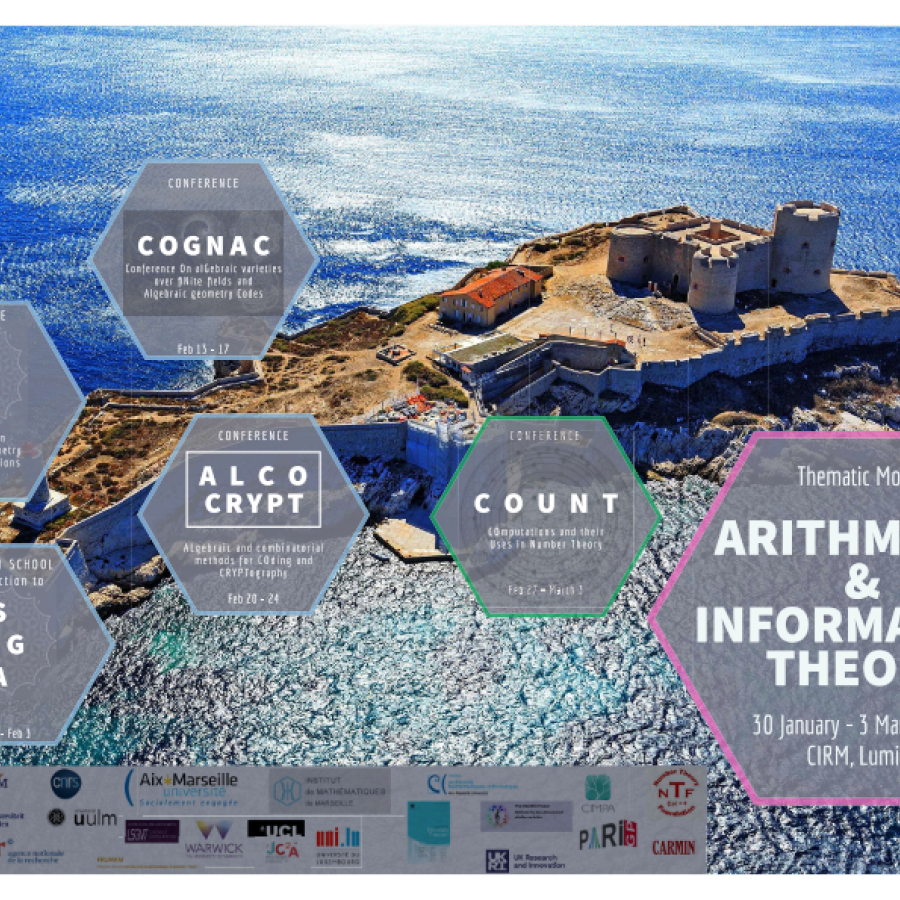
Arithmetic and Information Theory

The thematic month “Arithmetic and Information Theory” focuses on arithmetic geometry, information theory and their interplay.

Mon. 30 Jan, 2023 → Fri. 03 Mar, 2023

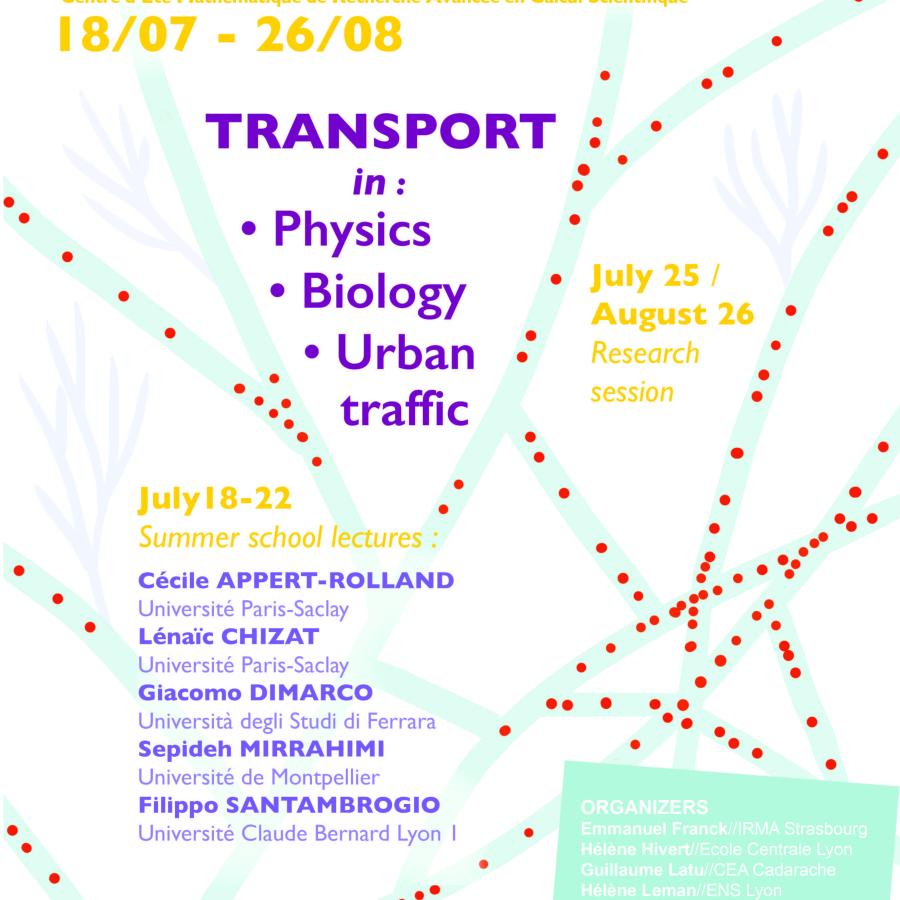
Transport in Physics, Biology and Urban Traffic

The CEMRACS is a scientific event of the SMAI (the French Society of Applied and Industrial Mathematics). The concept was initiated in 1996 by Yvon Maday and Fr´ed´eric Coquel and takes place every year at CIRM in Luminy (Marseille, France) during 6 weeks from mid-July. The goal of this event is to bring together scientists from both the academic and industrial communities to work and discuss on focused topics. During the first week, a classical school is proposed. It consists of several lectures given by leading scientists and related to the topics of the research projects.

Mon. 18 Jul, 2022 → Fri. 26 Aug, 2022